
 781.782.2100
How Much Sleep Do Seniors Need? A Guide to Healthy Aging and Rest
Date: April 27, 2026 | Article | Reading Time: 6 minutes
“How much sleep do seniors need?” sounds like a simple question, but it opens up a whole conversation about how the body changes, why nights get harder, and what you can actually do about it. If you’ve noticed that sleep isn’t coming as easily as it once did—or that you’re waking up more than you’d like—you’re far from alone.
So, How Much Sleep Do Seniors Need Each Night?
Short answer: 7–9 hours. That’s the same as younger adults. Age, however, brings real, measurable changes to how we sleep, and that’s why seniors tend to sleep less. Not because they need less.
- Circadian rhythm shifts move your internal clock earlier, which is why 9 p.m. suddenly sounds like a reasonable bedtime and you’re up at 5 a.m. whether you like it or not.
- Reduced melatonin production means the natural chemical signal that tells your brain to wind down gets quieter with age.
- Less deep (non-REM) sleep leaves you spending more time in lighter sleep stages, making it easier to wake from noise, light, or a full bladder.
- More frequent health conditions and medications compound the problem in ways that vary from person to person.
The stakes are real. Consistently poor sleep is linked to increased risk of high blood pressure, heart disease, diabetes, memory problems, falls, and injuries resulting from drowsy driving. Sleep isn’t passive recovery—it’s when your brain consolidates memories, your body repairs tissue, and your immune system does some of its most important work.
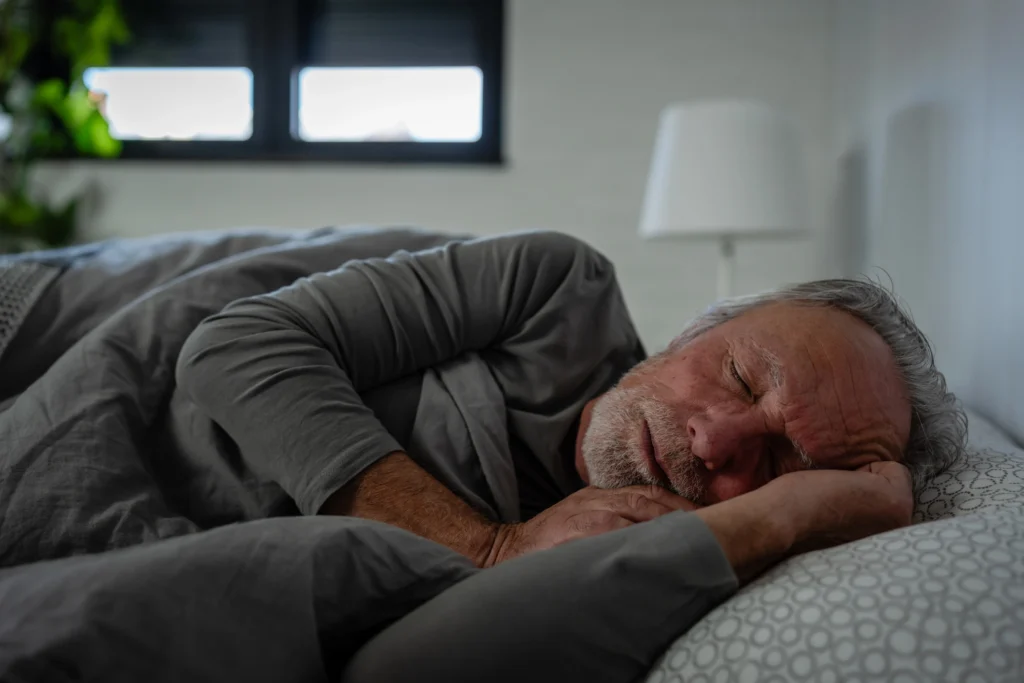
5 Common Sleep Disorders That Affect Older Adults
Knowing that seniors need 7-9 hours of sleep is one thing, but knowing how to get them is another—especially when a sleep disorder is quietly working against you. These are the most common culprits.
1. Insomnia
Insomnia is the most widespread sleep complaint among adults over 60. It’s not just trouble falling asleep—it’s also waking at 2 a.m. and staring at the ceiling, or waking at 4 a.m. and never getting back down. Stress, anxiety, chronic pain, and certain medications can all trigger or worsen it. Cognitive behavioral therapy (CBT-I) has solid evidence behind it as a first-line treatment—often more effective long-term than sleep aids, which carry real risks for older adults.
2. Sleep Apnea and Disordered Breathing
Sleep apnea causes repeated pauses in breathing throughout the night—sometimes hundreds of times—as throat muscles relax and partially block the airways. Snoring is a common sign, but not everyone who snores has sleep apnea. The oxygen dips and sleep fragmentation that result drive up risk for heart disease and cognitive decline. A CPAP device remains the gold-standard treatment, and the adjustment period is worth it.
3. Movement Disorders
- Restless legs syndrome (RLS): That crawling, tingling, “have to move” sensation in the legs that gets worse when you’re still—and worse at night. Iron supplementation or medication can help significantly. As always, consult your physician first.
- Periodic limb movement disorder (PLMD): Involuntary leg jerks every 20–40 seconds during sleep that disrupt sleep quality even if you don’t fully wake.
- REM sleep behavior disorder: Acting out dreams physically—sometimes dramatically. Worth discussing with a doctor promptly, as it can signal neurological changes.
4. Nocturia (Frequent Nighttime Bathroom Trips)
Medications, prostate conditions, and bladder issues are the usual drivers. Even one or two trips per night can break the deep-sleep cycle in ways that leave you feeling unrested by morning. Adjusting fluid timing, reviewing medications with your doctor, and treating underlying bladder conditions can make a meaningful difference.
5. Medications and Chronic Conditions
Diuretics, certain antidepressants, beta blockers, corticosteroids, and even some antihistamines can interfere with sleep quality or timing. Arthritis pain, GERD, and depression are also common culprits. The fix often isn’t a sleep aid—it’s a closer look at what’s already on your nightstand.
Everyday Habits That Keep Us Up at Night
Beyond diagnosable disorders, a handful of daily habits quietly chip away at rest:
- Low daytime activity reduces the physical tiredness that helps anchor good sleep at night
- Irregular sleep and wake times confuse your circadian rhythm
- Late caffeine (even from tea or chocolate) can stay in your system 6–8 hours
- Alcohol may help you fall asleep faster, but it fragments sleep in the second half of the night
- Bedroom environment—temperature, light exposure, and noise—matters more as sleep becomes lighter
How to Get Better Sleep: What Actually Works
When people ask how much sleep do seniors need, what they often really want to know is how to get more of it. These evidence-backed strategies make a real difference:
- Keep a consistent schedule. Same bedtime, same wake time—even on weekends. This is the single most powerful lever for sleep quality.
- Build a wind-down routine. Your brain needs 30–60 minutes of low-stimulation time before bed. A warm bath, reading, or gentle music all help signal the shift.
- Get moving during the day. Regular exercise—even walking—improves sleep depth and duration. Just finish at least three hours before bed.
- Cool and darken your room. The ideal sleep temperature is around 65–68°F. Blackout curtains or an eye mask help trigger melatonin release.
- Limit screens before bed. Blue light from phones and tablets suppresses melatonin. An hour of screen-free time before bed is worth building in.
- Talk to your doctor. If sleep problems persist beyond a few weeks, it may be time for a conversation. Untreated sleep apnea and chronic insomnia are medical issues—not just facts of aging.

How The Delaney® at The Vale Supports Better Sleep
Answering “how much sleep do seniors need?” is a starting point. Building a lifestyle and daily habits that help you catch those elusive 7-9 hours of restorative winks is where The Delaney at The Vale comes in.
Thoughtfully structured daily programming keeps residents physically engaged and socially active—which translates directly to better sleep at night. Comfortable, well-designed residences create the kind of sleep environment that promotes real rest. And knowledgeable staff are available to help residents navigate health concerns, medication questions, and personalized wellness goals.
Good sleep doesn’t settle in when the moon rises. Much of it grows out of how you spend your days.
Experience restful nights and vibrant days at The Delaney at The Vale. Our wellness-focused programs, nutrition, and supportive routines focus on the 8 Dimensions of Wellness to help you sleep better, stay active, and enjoy life to the fullest.
Schedule a visit today to see how our community can help you rest, recharge, and thrive.